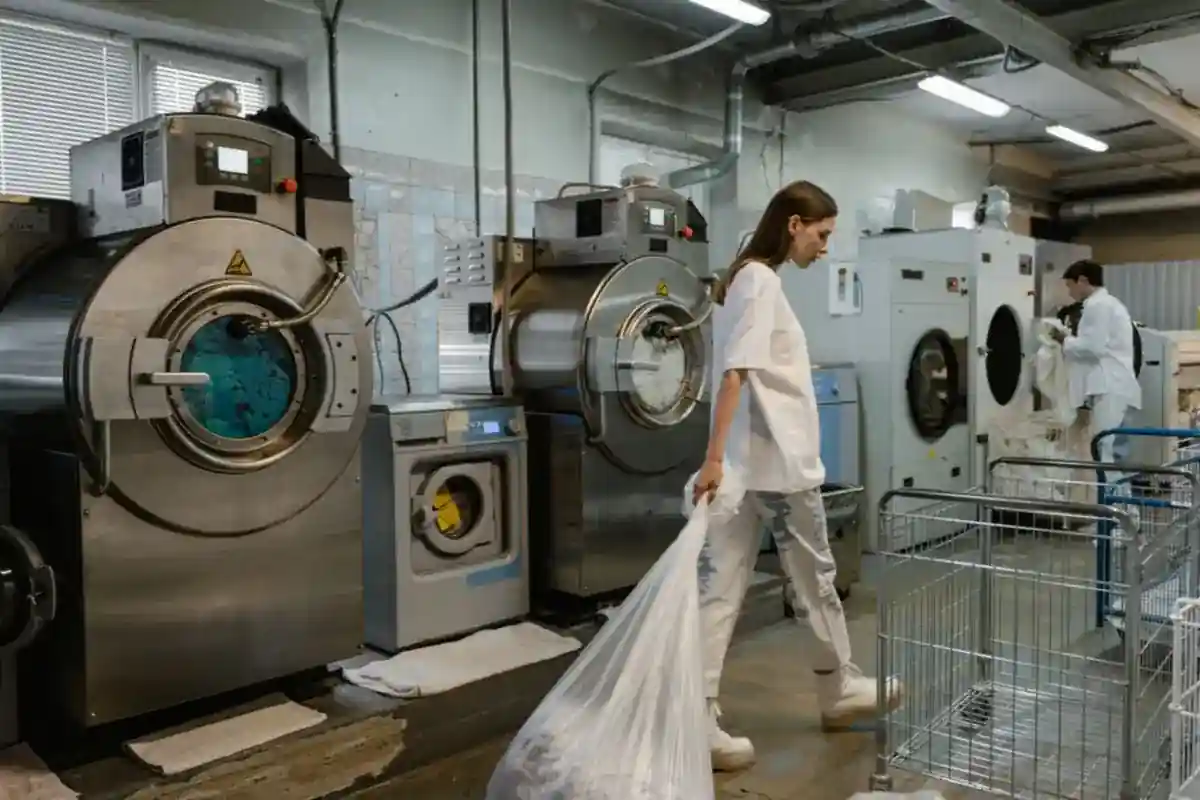
What does this occupation involve?
Tasks can include sorting, feeding machines, drying, finishing, folding and packing. Textile type, soiling and customer requirements determine the route. Used and clean items are kept separate according to hygiene procedures and the workplace layout. In an industrial laundry, you often work at one stage of a mechanised process. Recognising damage helps prevent unsuitable textiles from being sent back to customers.
Keep textiles identifiable from sorting to dispatch
A laundry worker keeps textile streams organised through washing, drying and finishing. Fabric, care instructions, contamination and customer allocation all influence sorting. Sheets, towels and workwear do not necessarily follow the same finishing route: flatwork ironing, folding and hanging are different tasks. Counting or scanning preserves article identity. Inspection picks up remaining stains, damage and poor finishing, with rejected items separated according to the procedure. Clean textiles also need an orderly route through packing and dispatch so the last handling stage preserves the result.
What will you do?
- Sort laundry into the agreed categories.
- Feed textiles into machines or finishing lines.
- Inspect and process clean items.
- Fold, bundle or pack for the correct customer.
- Keep the station tidy and report irregularities.
Where will you work?
You work indoors in a laundry or textile-care business. Heat, noise and standing work may be part of the environment. The team coordinates the flow between used-laundry and clean-laundry areas.
What does a working day look like?
You receive a station and production plan, then process textiles in a set sequence. You check quality and quantities and follow handover and hygiene arrangements when changing tasks.
Which skills and experience help?
A steady pace, quality awareness and accurate sorting help. Describe experience with flatwork ironers, folding machines, sorting or dispatch. Adjusting machine settings is not always part of an entry-level position.
How can you develop?
You can train in machine operation, textile identification or quality control. Experienced workers may also support new colleagues and help organise production.
Your practical experience
Follow a batch of bed linen or workwear through the tasks you performed. Identify sorting, machine loading, feeding the flatwork ironer or final inspection. Explain how customer items stayed identifiable and how stained, damaged or poorly finished pieces were handled before the order was dispatched.
Practical questions about the trade
Why does an industrial laundry sort by more than colour?
Fabric type, care instructions, soiling and destination or customer also matter. Different articles need different treatment and finishing routes. Recording or scanning helps prevent correctly washed items reaching the wrong delivery. Sorting therefore supports both textile care and reliable identification throughout the process, rather than simply separating light and dark items.
How does flatwork ironing differ from drying and garment finishing?
Drying removes moisture through a process suitable for the textile. A flatwork ironer smooths items such as sheets using heat and pressure. Garments may follow a route involving hanging or other targeted finishing, while towels have a different treatment path. The equipment and method depend on the article and required quality, not solely on processing speed.
What does a laundry worker look for before dispatch?
Checks include remaining stains, damage, poor finishing and incorrect customer allocation. Affected items are separated for retreatment, repair or assessment according to the procedure. Counting, folding and packing also contribute to delivery quality. A clean article is only correctly processed when it reaches the right batch in the condition required for that customer's order.
More about this occupation
Occupational, training and technical sources relevant to this page.
- SBB / KiesMBO — Professionele schoonmaak
- Medewerker wasserij - Amarant
- Pracownik pralni | Logistic Force
- 16,69 EUR/h Pracownik pralni przemysłowej (k/m) - bez języka!!! Amsterdam Elbląg • OLX.pl
- IEFP — funções de operador de máquinas de lavandaria
- 51-6011.00 - Laundry and Dry-Cleaning Workers
- Girbau — industrial flatwork ironers: heat transfer and pressure control