What does this occupation involve?
The job centres on accurate manoeuvring and coordination with planning, warehouse teams and drivers. You check instructions, identify trailer numbers and move units according to site rules. Coupling, positioning and checks form part of the task. Driving on a closed site differs from public-road driving. The employer confirms the qualifications, instruction and experience required for the actual assignment.
The right trailer, the right dock and a clear release
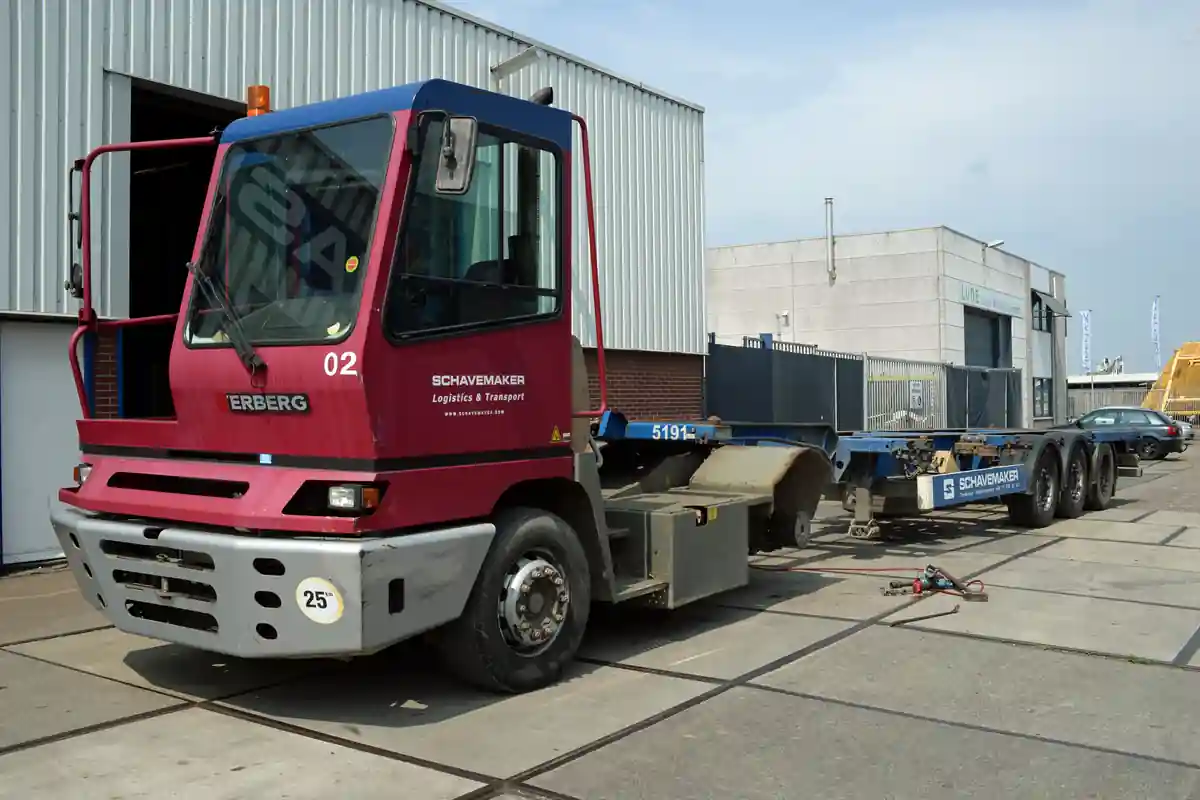
A yard driver moves trailers between parking spaces, staging areas and loading bays. Correct trailer identification and destination come before the manoeuvre: a neatly parked trailer at the wrong dock is still an operational error. Terminal tractors are designed for repeated short movements and frequent coupling, but require model-specific familiarisation. Drivers monitor coupling security, brakes, connections and the available space. At a loading bay, the warehouse's work status matters as well. A trailer moves only after the agreed release, so that vehicle movements remain coordinated with people and equipment inside it.
What will you do?
- Check shunting instructions and trailer numbers.
- Inspect the vehicle and assigned coupling points.
- Move trailers under the site's procedure.
- Position trailers accurately at loading bays.
- Report damage, obstructions and completed movements.
Where will you work?
You work at distribution centres, terminals or large logistics sites. Other traffic and shift work may be part of the environment. Visibility, communication and predictable movements are important.
What does a working day look like?
You receive the movement plan and check the vehicle. You carry out assignments while keeping in contact about available bays. You report when a trailer is ready or cannot be moved safely.
Which skills and experience help?
Experience with large vehicles, spatial awareness and controlled manoeuvring help. State whether you have driven a terminal tractor or a conventional tractor unit. Forklift experience does not replace shunting experience.
How can you develop?
You can develop into yard coordination, more complex vehicle combinations or logistics planning. Additional driver training may support a move into other transport roles.
Your practical experience
Describe a busy shift serving several loading bays, including trailer-number checks and communication with warehouse staff. Name the terminal tractor and coupling checks involved. Separate experience confined to a closed yard from work that included public-road movements, since those are different operating environments and may involve different authorisations.
Practical questions about the trade
How is driving a terminal tractor different from using a road tractor?
A terminal tractor is designed for short repeated movements and frequent trailer coupling. Its fifth wheel, controls and cab arrangement may differ from a road-going tractor. The driver needs familiarisation with that model and the yard's traffic plan. Truck-driving experience helps, but does not replace knowledge of local bay procedures or separate conditions for any public-road travel.
What matters when a yard driver checks a trailer coupling?
The connection must be secured and verified using the vehicle-specific procedure. Brakes, connections, trailer support and safe access between the units also matter. A coupling noise or a dashboard indication does not replace the prescribed checks. If engagement is uncertain, the combination stays stationary until a person with the relevant instruction has resolved the doubt.
Why must a shunter check that a trailer has been released from the dock?
People or a forklift may still be inside a trailer when its driver appears ready to move. The agreed release must therefore reflect the actual loading status. Lights, restraints or key-control arrangements can form part of the site's system. Conflicting indications must be resolved before movement, rather than treating a quiet-looking loading bay as permission to depart.
More about this occupation
Occupational, training and technical sources relevant to this page.
- SBB / KiesMBO — Logistiek medewerker
- Terminal trekkers
- Vlotweg Transport rangeert veel sneller en comfortabeler met eerste terminal trekker
- Coupling & uncoupling - HSE
- Section 6 - (Un)loading activities - HSE
- Workplace transport safety HSG136
- Wojewódzki Ośrodek Ruchu Drogowego w Ciechanowie - Sprzęganie C+E
- Coupling and decoupling trailers safely | WorkSafe.qld.gov.au