What does this occupation involve?
You may work in an artisan bakery or a larger production facility. Both require correct quantities, a logical sequence and hygienic working. Dough changes during mixing, resting and baking, so you monitor the process and report deviations. Bread baking, pastry work and production-line operation are different specialisms. Explain clearly which products and processes you have worked with.
Follow dough development through to the finished loaf
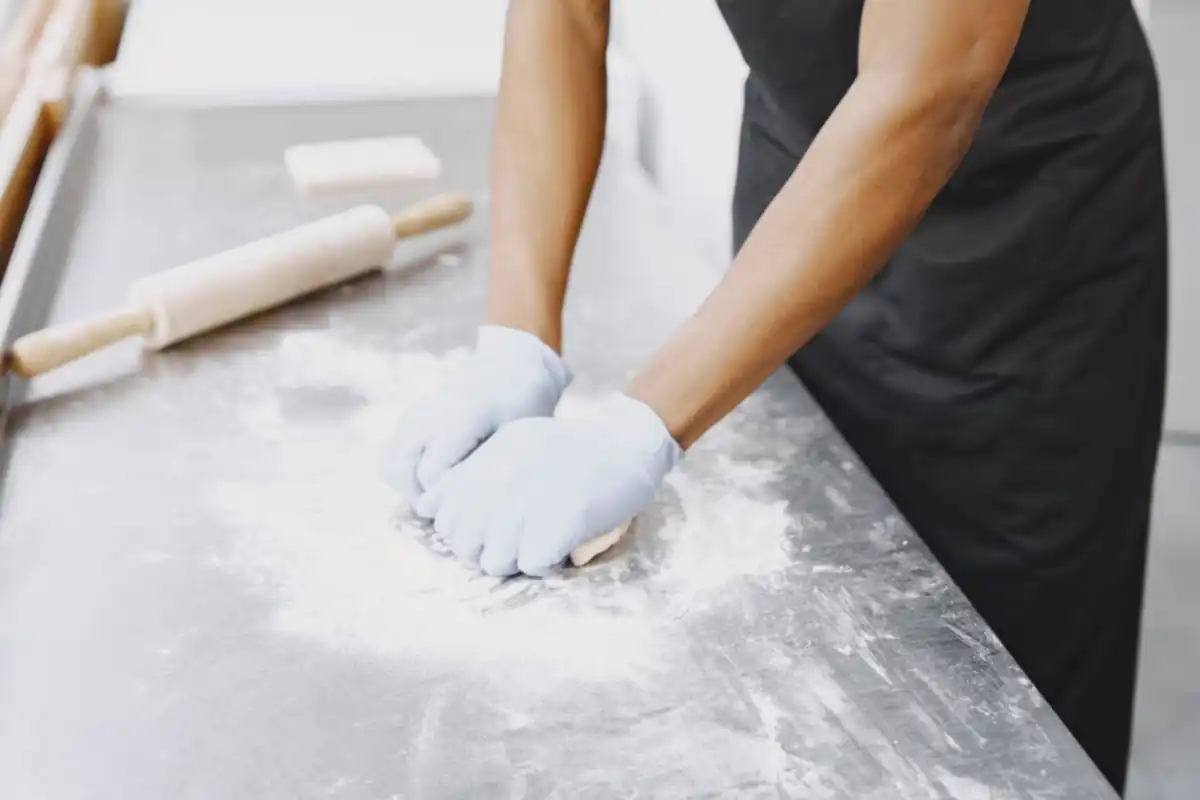
A baker follows a recipe while assessing how the dough develops. Flour, water and the selected yeast or sourdough process shape the work. Weighing, mixing, dividing and shaping must fit proofing and oven scheduling. Moving dough forward too early or late can change the result. Quality checks concern weight, shape, crust and crumb as well as colour. Craft production and an industrial bread line involve different tasks, although both depend on understanding the product and checking the links between production stages.
What will you do?
- Check ingredients and recipes.
- Weigh ingredients and prepare dough or batter.
- Shape products and follow the specified process.
- Bake and assess the finished products.
- Clean equipment and maintain production records.
Where will you work?
You work indoors in a bakery or food manufacturing business. Heat, standing work and early or variable hours may be involved. Freshness and delivery times influence the production schedule.
What does a working day look like?
You begin with the plan and available ingredients. Preparation, processing and baking may overlap during the shift. You keep batches identifiable and check that products meet the required standard.
Which skills and experience help?
Accuracy, an understanding of dough and interest in food hygiene help. State your experience with bread, pastry, ovens or production lines. Following recipes and noticing changes are important skills.
How can you develop?
You can specialise in bread, pastry or industrial bakery processes. With experience, you may support a production line or contribute to quality checks and product development.
Your practical experience
Choose one bread type and describe it from ingredient weighing to final inspection. Identify the mixer, dividing or shaping work and oven involved. Explain how you recognised a change in dough behaviour and which stages you assessed independently or completed with supervision from another baker.
Practical questions about the trade
Why can a baker not judge dough proofing by time alone?
Development depends on ingredients, dough condition and the selected yeast or sourdough process. Time is part of the recipe, but the state of the dough still matters for the next operation. Bakers assess that development against the product instructions. A fixed elapsed time alone is not a complete assessment of readiness for shaping or baking.
What does a bread baker check besides crust colour?
Weight, shape, volume and internal structure should also suit the product. A well-coloured loaf may still show problems caused earlier in mixing, dividing or proofing. Quality assessment therefore connects the finished bread with the production process. Recognising and discussing deviations helps prevent the same problem being repeated in the next batch.
How does craft baking differ from working on a bread production line?
Craft work may involve more manual dividing, shaping and direct oven operation. A production line places greater emphasis on the relationship between machinery and product flow. Both settings require recipe knowledge and quality control. Experience should therefore identify the actual doughs, machines and stages involved rather than treat these production environments as interchangeable.
More about this occupation
Occupational, training and technical sources relevant to this page.
- Opleiding Uitvoerend bakker
- SBB / KiesMBO — Mechanisch operator
- Opleiding Zelfstandig werkend bakker
- Produkcja ciasta żytniego - Przygotowanie surowców i wytwarzanie ciast - zpe.gov.pl
- Technologie stosowane w produkcji piekarsko‑ciastkarskiej - E‑book – Wademekum technologii produkcji produktów spożywczych - zpe.gov.pl
- WorldSkills Portugal — Descritivo Técnico de Padaria
- IEFP — funções de padeiro
- Baker | Explore Careers