What does this occupation involve?
Bricklaying involves more than stacking bricks. You follow drawings and dimensions while allowing for openings, corners and other building parts. On facades, appearance and correct construction both matter. Renovation may require repairing or matching existing masonry, making material choice and appearance especially important.
Keep the bond, course heights and hidden details aligned
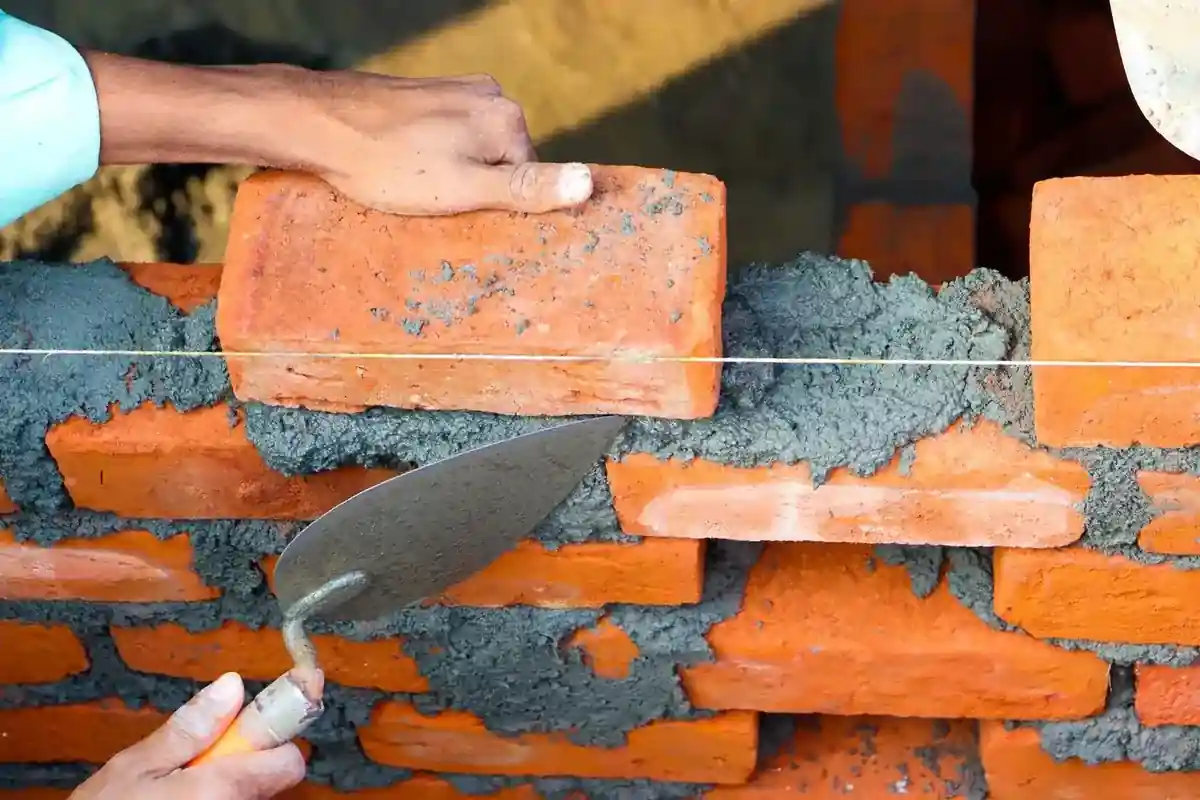
Bricklayers build from setting-out lines, course heights and the specified bond. Lines, levels and profiles help control alignment and the position of openings. Bricks, blocks and mortar need to suit the application. Cavity construction adds ties, insulation interfaces and moisture-management details to the visible masonry. Lintels and window openings also need coordination with adjoining work. Facing brickwork demands care with joint appearance and surface cleanliness, but appearance alone is not sufficient. Small dimensional errors accumulate across courses, so checks continue as the wall rises rather than waiting until it is complete.
What will you do?
- Review drawings and dimensions and prepare the work area.
- Prepare materials and use profiles or lines for alignment.
- Lay bricks or blocks in the specified bond.
- Complete openings, corners and connections as instructed.
- Check levels, alignment and finishing throughout the work.
Where will you work?
Most work is outdoors on construction or renovation sites. Weather can affect the method and schedule. You work with labourers, carpenters and supervisors using suitable access equipment.
What does a working day look like?
After discussing the work, you check dimensions and materials and build the assigned section. Height, lines and the bond need repeated attention. At the end, work and materials are protected and organised as agreed.
Which skills and experience help?
An eye for straight lines, practical calculations and careful handwork help. Describe the bricks, blocks and projects you know. Explain whether you set out independently or mainly work from prepared profiles. Safe teamwork is part of the trade.
How can you develop?
You can develop into all-round masonry, repair work or specialist facade details. Further experience and training can support a role guiding a crew.
Your practical experience
Describe the brick or block type, bond and wall construction in a specific project. A facade with window openings can show profile setting and course-height control. Identify whether your work included cavity components, preparing joints for pointing or completing the final pointing, rather than assuming those duties were included.
Practical questions about the trade
Why does a bricklayer check both bond and course height?
Bond controls the relative arrangement of masonry units, while course height combines the unit and mortar joint. Both must coordinate with drawings and openings. A straight-looking wall can still have the wrong distribution around a window or lintel. Repeated checks against the setting-out references prevent small errors from accumulating into a difficult final adjustment.
Can the same mortar be used for every brick or block?
Mortar needs to suit the masonry unit, intended use and specified construction. A different combination can change workability and the finished result. The bricklayer follows the selected mortar system and keeps preparation consistent. Altering the mix for convenience does not replace an agreed decision about unsuitable materials or changing conditions during the masonry work.
Which hidden details matter when building a cavity wall?
Wall ties, insulation interfaces and moisture-management components need to follow the construction detail. Openings and lintels also require the specified connections and protection. These features are checked as the wall rises because they can become concealed. Consistent joint appearance is therefore only one part of quality and cannot establish that the cavity construction is correct.
More about this occupation
Occupational, training and technical sources relevant to this page.
- SBB / KiesMBO — Metselaar
- SBB – Metselaar: stelwerk, metselwerk, voorzieningen en voegwerk
- Metselaar BBL | Praktijkgerichte bouwopleiding bij Yonder
- Rodzaje murów i tynków - Organizacja wykonywania i renowacji murów i tynków - zpe.gov.pl
- IEFP – Pedreiro: alvenaria e instrumentos de controlo
- IEFP – Pedreiro: alvenaria e leitura de desenhos
- Skills England – Bricklayer occupational standard
- CITB – Bricklayer apprenticeship training specification