What does this occupation involve?
The process starts with checking and preparing the background. You then apply and finish the suitable material to the required standard. Straight corners and neat connections take practice. Renovation may involve repairs, while new builds often have larger surfaces. Interior gypsum work and exterior render are different applications.
Control background suction before chasing a smooth finish
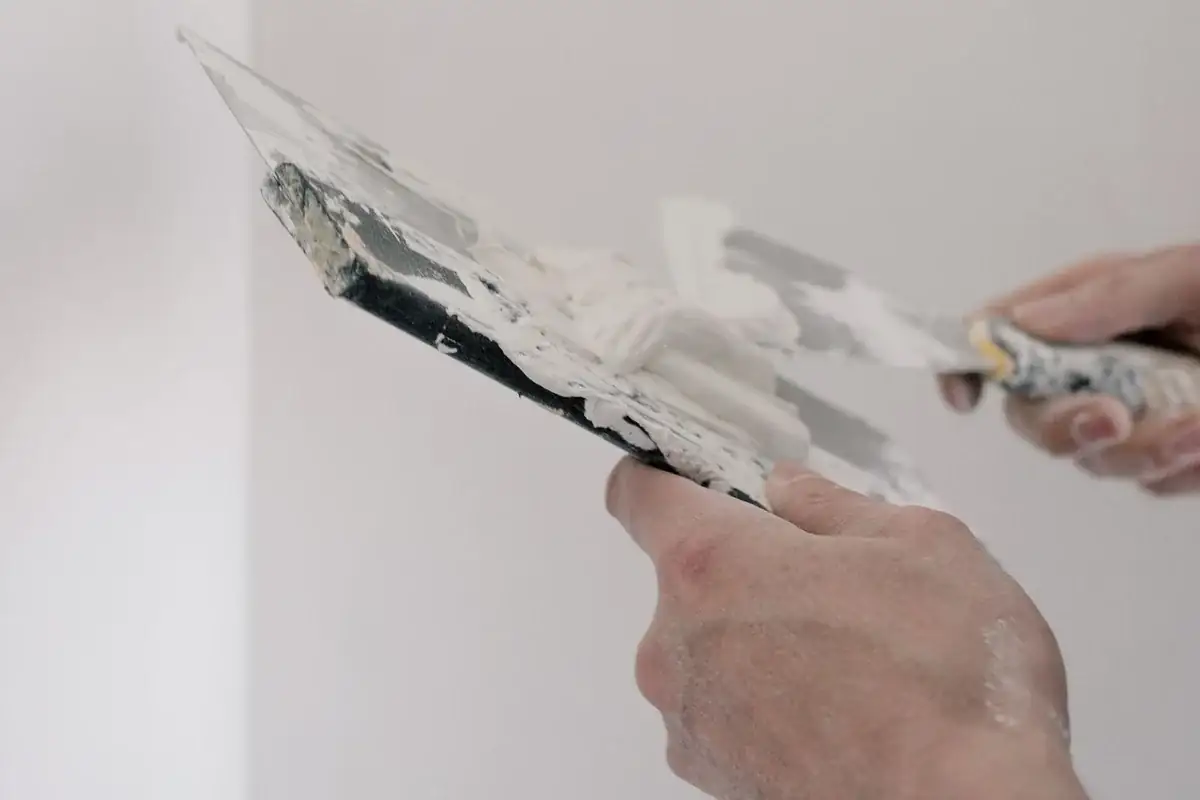
Plasterers assess the wall before mixing material or using a spray machine. The background must be sound and suitable; absorbent masonry and smooth concrete need different preparation. Coat build-up, beads and reinforcement follow the selected system. Straightedges and trowels help control flatness, corners and finish. Gypsum plaster, cement-based render and a thin finishing skim are not arbitrary substitutes for one another. The next trade also matters: a surface that feels smooth may still need drying before decoration. Product requirements and site conditions guide readiness, rather than appearance alone.
What will you do?
- Assess and prepare the background and protect the work area.
- Apply specified preparation and fit relevant profiles.
- Prepare and apply material to walls or ceilings.
- Finish the surface flat, smooth or textured as agreed.
- Check connections and clean tools and the workplace.
Where will you work?
Most work is indoors in new or existing buildings. Preparation may create dust and some tasks involve working overhead. Access, lighting and coordination over drying time matter.
What does a working day look like?
You protect the room and prepare surfaces, then divide the work into manageable areas. Application and finishing must follow the material’s working sequence. Final checks confirm readiness for the next finish.
Which skills and experience help?
Hand skills, an eye for flatness and understanding materials are useful. Describe the plasters, manual methods or machines you know. Distinguish renovation, new-build and decorative experience. Asking for clarification early can avoid extensive rework.
How can you develop?
You can broaden into renovation, machine application, decorative finishes or other finishing systems. Further training can support more complex independent work.
Your practical experience
Describe a wall or ceiling with its background and plaster system, stating whether application was manual or machine-assisted. Identify bead work and straightedge checks. An example involving absorbent masonry or a change in background material shows how you assessed preparation rather than only how quickly you applied the plaster.
Practical questions about the trade
Why does a plasterer use different treatments for different backgrounds?
Strongly absorbent masonry can draw water from fresh plaster, while a smooth low-suction surface may need a bonding treatment. Those are different problems requiring suitable products. The plasterer identifies the material, soundness and suction, then follows the plaster system. Applying a convenient general primer does not replace assessing the actual background before plastering begins.
How does a backing or levelling coat differ from a finishing skim?
The backing or levelling layer establishes the required shape and flatness. A thin finishing coat provides the finer surface within its permitted application. Materials and layers need to work together. Gypsum and cement-based products also have different uses, so the ability to produce a smooth finish is not enough to establish that a product suits the background and location.
What shows that plasterwork is ready for decoration?
Check flatness, corners, interfaces and the specified surface finish alongside the condition and dryness of the plaster. A smooth layer can still retain moisture or need further drying. Decoration proceeds when the background and following coating requirements are compatible. A fixed number of elapsed days is not a reliable universal readiness test for every material and site condition.
More about this occupation
Occupational, training and technical sources relevant to this page.
- SBB / KiesMBO — Stukadoor
- Stuc-Primer | Knauf
- Betokontakt | Knauf
- Klusadvies: een stappenplan voor een grote stucklus | Knauf
- Jak położyć maszynowy tynk gipsowy? - info.knauf.pl
- Tynki i zaprawy
- Gama Renove, a melhor alternativa de rebocos de gesso
- Knauf Fino | Knauf
- Plasterer / Skills England
- Site Ready Skimming Course | British Gypsum