What does this occupation involve?
You compare the room with the installation plan and check dimensions and service positions. The kitchen is then assembled in a logical sequence. Floors and walls are not always level or square, so adjustment and fitting are important. Gas, electrical and plumbing connections depend on the assignment and your competence. Those tasks are agreed in advance with the appropriate trades.
A fitted kitchen must match the actual room
A kitchen fitter compares the layout with actual corners, floor levels, service points and appliance positions. Cabinets need suitable support and alignment, with wall fixings matched to the substrate. Fillers and plinths accommodate irregularities without obstructing doors. Worktops require material-specific cutting and protection around openings. Sinks, hobs and appliances must fit while retaining necessary access for maintenance. Final checks cover gaps, hinges, drawers and agreed connections. Responsibility for specialist service connections is settled before the fitting sequence makes those connections difficult to reach.
What will you do?
- Check the room and delivered kitchen components.
- Position, level and connect cabinets.
- Fit worktops, fillers and other specified parts.
- Adjust doors, drawers and fittings.
- Inspect function, finish and possible damage.
Where will you work?
You mainly work indoors in homes or housing projects. Occupants may be present. Protecting the surroundings and communicating clearly about missing parts or unexpected dimensions are valuable habits.
What does a working day look like?
You start by checking delivery, drawings and working space. You install the cabinet arrangement and associated parts, then adjust the fronts, check operation and leave the area tidy.
Which skills and experience help?
Installation, woodworking and cabinet hardware experience help. Explain whether you can measure up independently, machine worktops and resolve practical fitting problems. Describe service connection skills separately.
How can you develop?
You can specialise in complex kitchens, unusual worktops or larger installation projects. Experienced fitters may also survey jobs and support newer colleagues.
Your practical experience
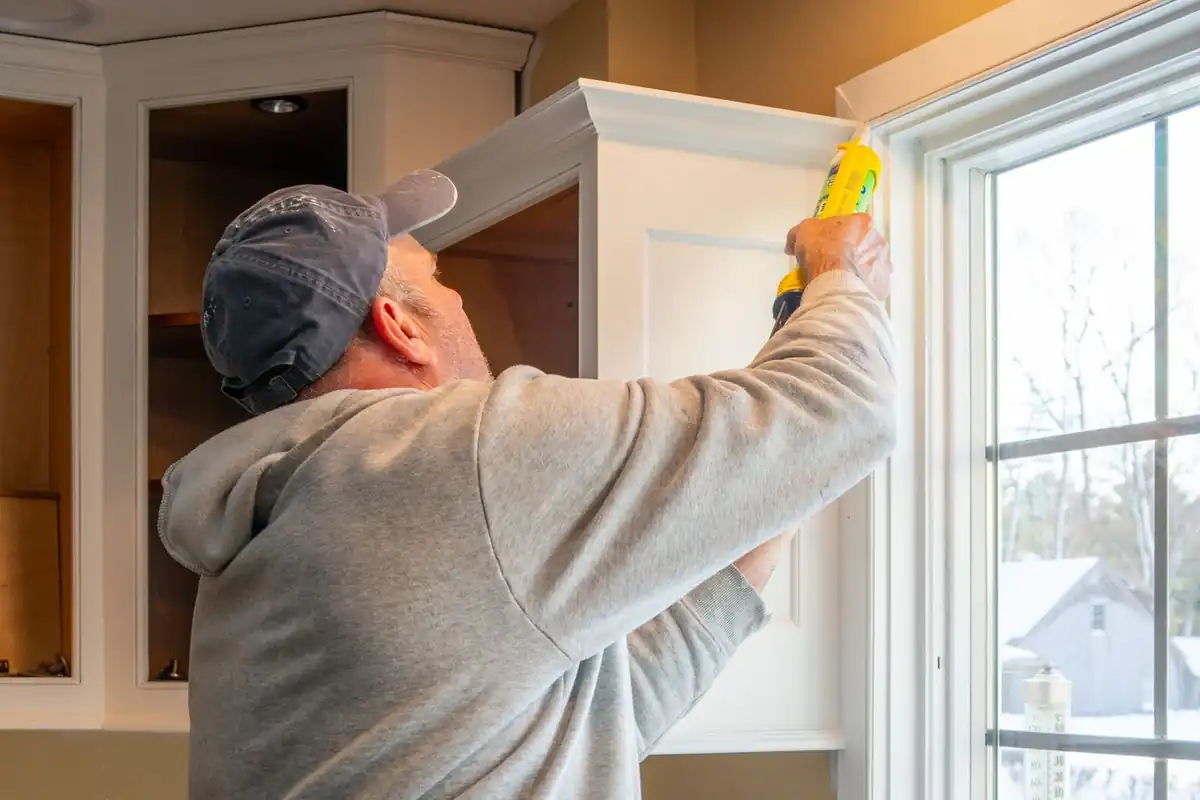
A corner kitchen in a room with uneven walls is a useful example. Identify the cabinet system, worktop material and fillers you made. Explain levelling and front adjustment, then clarify which cut-outs and appliance fitting you completed and who was responsible for the electrical and plumbing connections.
Practical questions about the trade
Why does a kitchen fitter measure the room again before fitting?
The design shows the intended arrangement, but walls, floors and service points may differ from assumptions. Dimensions, squareness and available space are checked before irreversible cutting. Door and appliance opening clearances are included. Finding a discrepancy early allows an appropriate detail to be agreed before it affects the worktop and neighbouring units.
Why does kitchen worktop installation depend on the material?
Laminate, timber and other worktop materials require different cutting, support and edge-treatment methods. Sink and hob cut-outs follow their own instructions as well. A clean cut is insufficient if the exposed edge needs protection. Specially manufactured worktops may also involve a separate measuring, fabrication and installation stage within the kitchen fitting sequence.
Does kitchen fitting automatically include every appliance connection?
Positioning cabinets and appliances is different from carrying out every water, gas or electrical connection. Responsibilities need to match the required competence and agreed work package. The fitter checks dimensions, ventilation space and connection access. Services are coordinated before the kitchen is closed up and checked as part of the completed installation handover.
More about this occupation
Occupational, training and technical sources relevant to this page.