What does this occupation involve?
Reinforced concrete combines concrete and steel. Your role is to assemble reinforcement to the drawing and place it correctly. Bars, mesh and prepared components must maintain the specified arrangement and spacing. Because most of the steel disappears from view later, checks during assembly are especially important.
Keep the reinforcement in its designed position
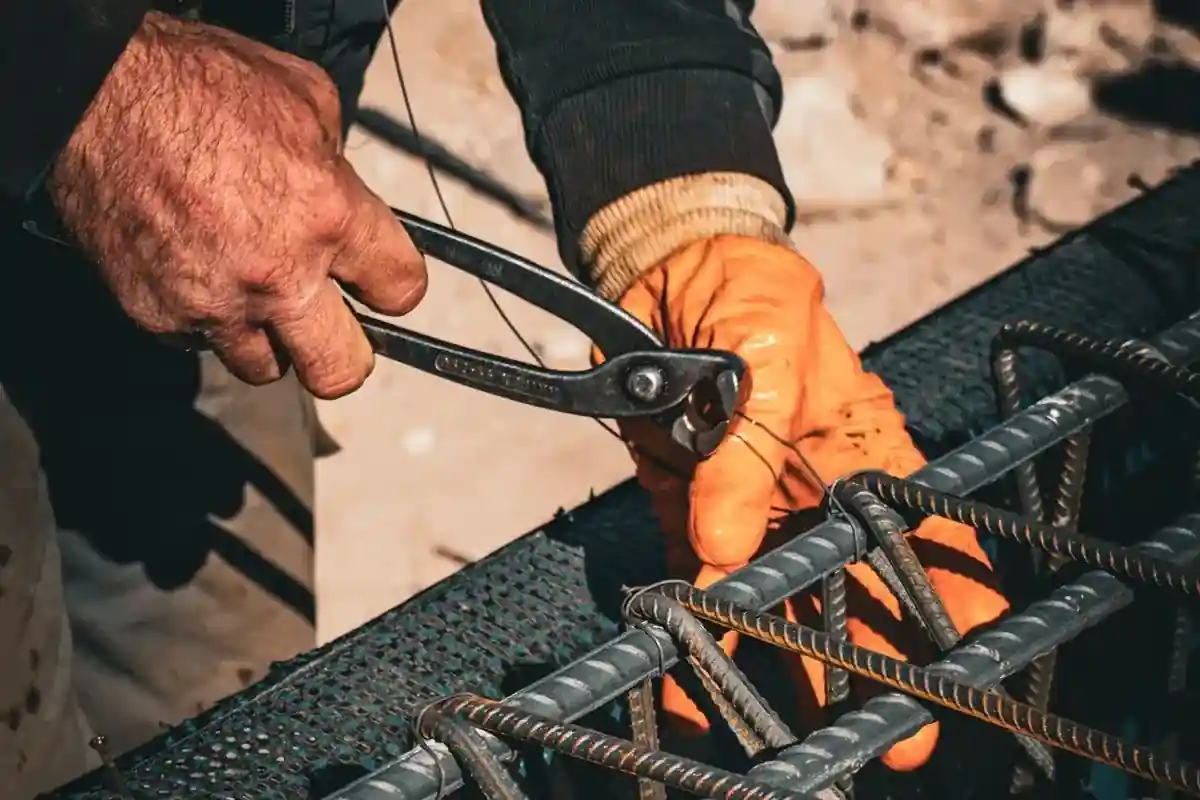
Steel fixers assemble bars and mesh from reinforcement drawings and bending schedules. Sorting by bar mark, shape and diameter prevents similar-looking components being used in the wrong position. Tying holds the assembly together, while spacers and supports maintain cover and the relationship between reinforcement layers. Openings, laps and cast-in components can create congested areas that need careful detail checks. A fixer does not simply alter a bar to make an obstruction disappear. Inspection before concreting leaves discrepancies accessible, and the team also coordinates the handling and positioning of completed cages.
What will you do?
- Review reinforcement drawings and gather the correct materials.
- Position and connect bars or mesh to the work order.
- Fit specified spacers and related components.
- Check dimensions, position and clearance for other work.
- Report differences before forms are closed or concrete is poured.
Where will you work?
Work takes place on building sites, at precast factories or in reinforcement workshops. Projects can include floors, walls, columns and larger structures. Handling materials and bent working positions make suitable equipment and task organisation important.
What does a working day look like?
You prepare the required materials, assemble reinforcement or install prefabricated sections, and check the relationship with the formwork. The completed section is handed over for inspection before the next construction stage.
Which skills and experience help?
Spatial awareness, drawing interpretation and accuracy are valuable. Explain which reinforcement types and projects you know. Use agreed handling equipment for heavy materials. Changing a structural design independently is outside normal installation duties.
How can you develop?
Experience can lead to more complex reinforcement work or assisting a crew with preparation and checks. Additional trade training can support that development.
Your practical experience
A slab, beam or column reinforcement example can show how you used bar marks and schedules. Identify cage tying, mesh installation and spacers within your duties. Explain how you spotted a missing component or clash with a cast-in item and had it resolved before the concrete covered the work.
Practical questions about the trade
What does a steel fixer read from drawings and bar schedules?
They connect each component with its mark, shape, dimensions and position in the structure. The fixer uses them to sort bars and mesh and build the correct arrangement. A bar that roughly fits is not necessarily the specified one. Openings, connections and laps also need the current detail, with uncertainties resolved before reinforcement is finally fixed in place.
Why do reinforcement spacers and supports matter?
Spacers maintain the required separation between reinforcement and formwork, while supports keep layers in their intended relationship. They help achieve specified cover and preserve the designed reinforcement position. Their type and placement need to suit the element. A shifted cage or improvised support can therefore matter even when the bars themselves have the right size and shape.
Can a steel fixer change a bar that clashes with an opening?
The bar belongs to a designed reinforcement arrangement. Removing it or changing its shape or position can alter the intended function. A clash with an opening, service penetration or cast-in item therefore needs an agreed resolution. The fixer checks revised information afterwards, rather than treating the removal of an inconvenient bar as an ordinary adjustment within routine assembly.
More about this occupation
Occupational, training and technical sources relevant to this page.
- SBB / KiesMBO — Gespecialiseerde aanneming
- Werkzoekenden | Vereniging Wapeningsstaal Nederland
- Richtlijnen voor afstandhouders | Betonstaal.nl
- Przewodnik dla uczącego się - Montaż zbrojenia oraz układania zbrojenia w deskowaniu lub formie - zpe.gov.pl
- IEFP – Armador de ferro: execução e colocação de armaduras
- IEFP – Armador de ferro: corte, moldagem e montagem
- Steel fixer / Skills England
- Steel fixer / Skills England