What does this occupation involve?
A heat pump is part of a complete heating system. The indoor and outdoor units, heat distribution and controls must suit the installation design. You read the installation plan, agree responsibilities and check the supplied components. New installations, replacements and maintenance involve different tasks, so the exact scope should be clear before work begins.
Connecting the heat pump to a working heat-distribution system
A heat-pump installer integrates the unit with the water circuit, controls and electrical provision within the scope of their competence. The correct schematic matters because monobloc and split systems use different connections. Radiators, underfloor heating and domestic hot-water provision also shape the installation. Handover involves circulation, air removal, leak checks, sensors and control behaviour, rather than merely a running outdoor unit. Low flow or abnormal pump operation needs investigation against the design and manufacturer's information. Work on the refrigerant circuit remains a separate specialist scope requiring the appropriate current competence and authorisation.
What will you do?
- Check the installation location, access and supplied materials.
- Fit units, pipework, brackets and insulation to the agreed instructions.
- Coordinate with electricians and other installation specialists.
- Carry out assigned checks and record measurements accurately.
- Leave the work area tidy and hand over relevant operating information.
Where will you work?
You work for installation companies in homes, plant rooms and outdoor areas. Equipment can be heavy and access restricted. Planning deliveries and using appropriate handling equipment are important parts of preparing the job.
What does a working day look like?
The day starts with the job plan and a materials check. Installation is followed by coordination over connections and checks on completed work. On a maintenance visit, reported problems and service history become the starting point.
Which skills and experience help?
Experience with heating pipes, diagrams and careful assembly is useful. You need to understand technical instructions and recognise work requiring a colleague with different qualifications. Explain which parts of an installation you can complete independently and which training you still need.
How can you develop?
You can develop in commissioning, fault finding or service and maintenance. Experience across different systems can support a move towards more complex installations or helping train new colleagues.
Your practical experience
Describe an air-to-water installation by system type, heat emitters and your role in commissioning. Identify the pipework, circulating pumps, filters and controls you handled. Keep water-side installation experience separate from refrigerant-circuit intervention, and explain which operating checks you performed and recorded before the system was handed over.
Practical questions about the trade
How does installing a monobloc heat pump differ from a split system?
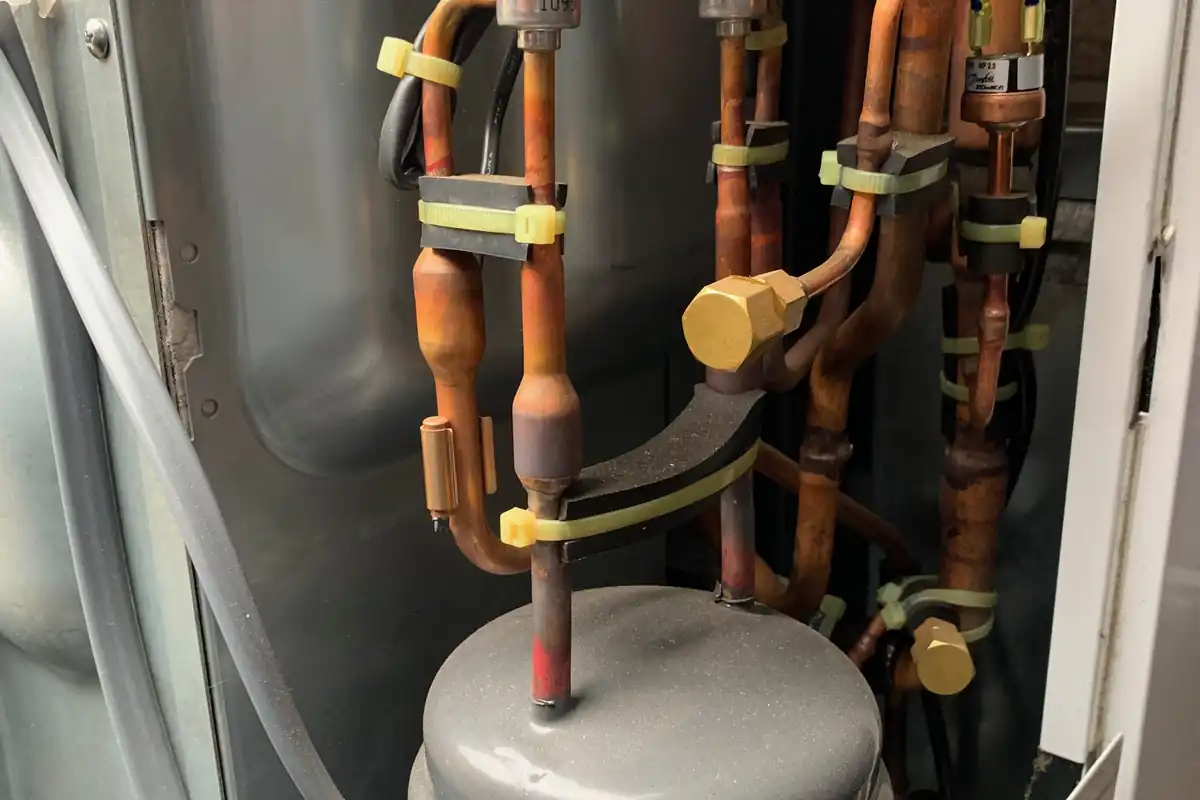
In a typical air-to-water monobloc, the refrigerant circuit is contained in the outdoor unit and water pipes connect it to the building. A split system connects indoor and outdoor units through refrigerant pipework. This changes installation tasks, protection of external connections and specialist work. The exact arrangement and competence requirements must be checked for the particular equipment.
Why does a heat-pump installer check water flow?
The heat pump needs to transfer its output into the water circuit. Insufficient circulation can disrupt operation and cause faults. Checks therefore consider air, valve positions, filters and circulating-pump performance against the design and manufacturer's instructions. A normal-looking pressure reading does not on its own establish that the required water flow is available.
What does commissioning an air-to-water heat pump involve?
Commissioning checks whether the installation, water circuit, sensors and controls function together. The installer completes the prescribed inspections and test runs, assesses flow and operating behaviour, and records relevant settings and results. Control choices must suit the emitters and design. Seeing the outdoor unit start is therefore only part of confirming a usable, completed installation.
More about this occupation
Occupational, training and technical sources relevant to this page.
- SBB / KiesMBO — Airco/warmtepompmonteur
- SBB / KiesMBO — Werktuigkundige installaties
- Waarom kiezen voor de Daikin Monobloc? | Daikin
- Różnice między pompą ciepła monoblok a split | Daikin
- Daikin Altherma M — Bomba de calor monobloco
- Daikin Altherma — Installer reference guide (EHVH-CB)
- ROTEX HPSU compact Ultra — Installation and maintenance manual
- Daikin Altherma — Installer reference guide: commissioning and flow checks
- GC2 - Pas naast de bestaande verwarmingsketel een elektrische warmtepomp toe | RVO.nl