What does this occupation involve?
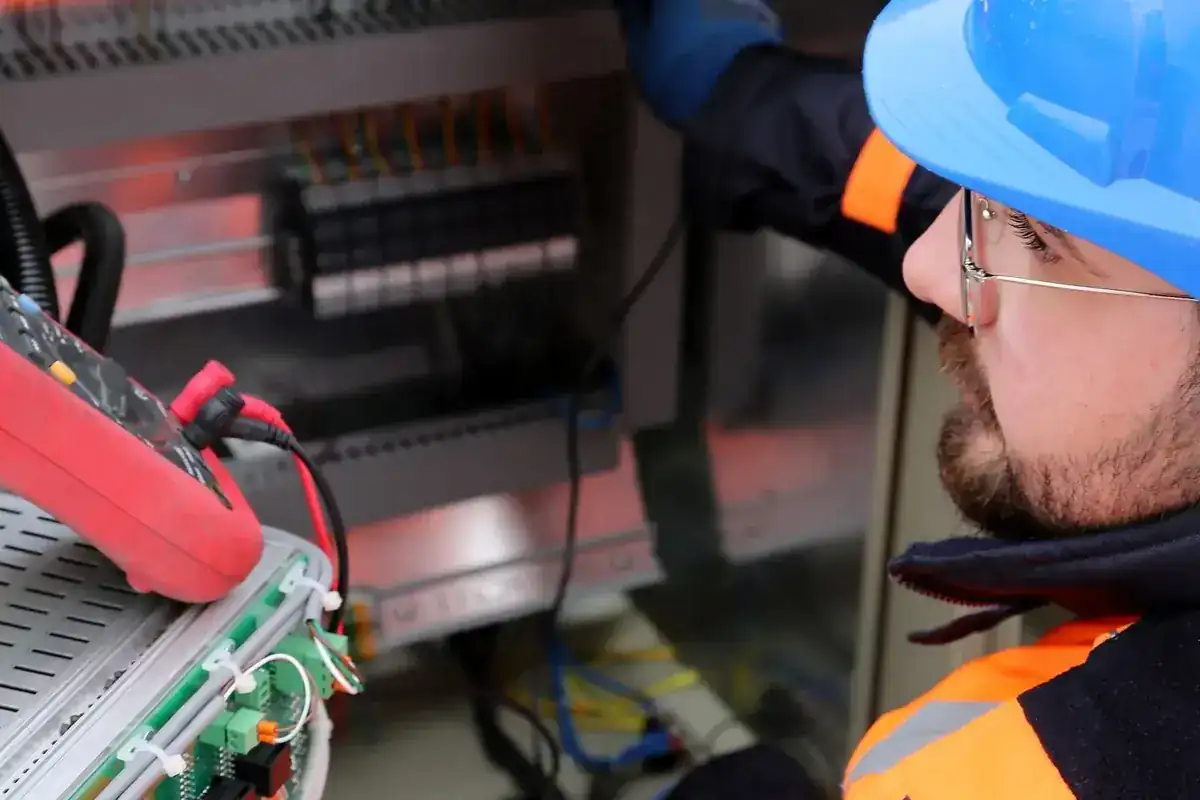
Lift doors, drives, controls and protective devices must operate together correctly. Installing a new lift differs from maintaining an existing one. You therefore work with technical documentation, defined procedures and agreed checks. Fault finding starts with understanding the symptoms and reviewing the information already available about the installation.
Connecting door behaviour, controls and landing accuracy
A lift technician combines mechanical and electrical work on equipment that carries people. Door guidance, drives, contacts and controls can contribute to the same fault, so a code does not automatically identify a component to replace. The floor involved, operating conditions and repeatability matter. Maintenance includes prescribed checks and recording abnormalities, while modernisation may replace controls, drives or door components. Work in the shaft or pit and return to service follow specific safety procedures. Bypassing a protective function is not a routine method of restoring a lift to normal operation.
What will you do?
- Review the work order and technical information for the lift.
- Inspect assigned mechanical and electrical components.
- Fit, adjust or replace parts according to work instructions.
- Perform specified measurements and tests with the responsible colleagues.
- Report completed work, findings and outstanding issues.
Where will you work?
You work in residential buildings, shops, hospitals and other properties with lifts. Some tasks involve restricted spaces or height. Building managers and users need clear information about progress and the availability of the installation.
What does a working day look like?
You review the schedule and required parts. On site, you assess the situation before starting maintenance or installation. An unexpected fault can change the plan. The job ends with checks and a careful handover.
Which skills and experience help?
Electrical and mechanical knowledge is valuable. You need to follow diagrams, investigate systematically and recognise the limits of your competence. Equipment-specific training, safety instruction and supervision are important before working independently on an installation.
How can you develop?
You can specialise in fault response, modernisation or a particular lift system. Supporting colleagues with complex faults and helping train apprentices are other possible developments.
Your practical experience
A recurring door fault or inaccurate landing provides a useful example of lift-service experience. Describe the signals and mechanical components you examined and the checks after repair. Identify door-control, drive, schematic-reading and maintenance-record experience separately from passenger rescue or specialised work inside the lift shaft.
Practical questions about the trade
How do a lift's car doors differ from its landing doors?
Car doors travel with the lift car, while landing doors remain at the floors. The door system coordinates their operation through the drive and mechanical coupling arrangement. Opening or closing problems can consequently involve several interacting parts. The technician assesses the complete arrangement and protective functions rather than assuming every door complaint comes from the same motor.
Why is a lift fault code not a complete diagnosis?
The code needs to be connected with observed behaviour, the floor involved and whether the problem repeats. Mechanical door conditions, signals and controls can affect one another. Maintenance history and observations help separate causes from consequences. After repair, the prescribed functional checks are completed and recorded; simply resetting the alarm does not establish that the fault is resolved.
How does lift maintenance differ from component modernisation?
Maintenance keeps the existing installation working under its maintenance plan and identifies wear or abnormalities. Modernisation changes components or systems, such as door drives, controllers or frequency drives. Connections, settings and verification requirements can change as a result. Technicians should therefore distinguish periodic servicing and repairs from installing, integrating and checking upgraded components.
More about this occupation
Occupational, training and technical sources relevant to this page.
- SBB / KiesMBO — Service en onderhoud elektrotechniek
- SBB / KiesMBO — Service en onderhoud werktuigbouw
- Liftdeuren vervangen en informatie - KONE Nederland
- Lift componenten vervangen - KONE Nederland
- Liftonderhoud | Moeiteloos service en voorspellend liftonderhoude voor elk merk - KONE Nederland
- Modernizacja podzespołów wind | KONE Polska - KONE Polska
- Técnico(a) de Manutenção de Elevadores - Lisboa (Regime Noturno) Detalhes do trabalho | Schindler Group
- Contratos de manutenção - Serviços multimarca | Schindler Portugal
- Learn how to identify problems with your building's lift | Otis UK
- Take these preventive measures to avoid corrective maintenance on your elevators | Otis UK