What does this occupation involve?
Welding plastics involves different materials and processes from welding steel. Material identification, preparation and the selected joining method are central to the work. Assignments may involve sheet material, pipe sections or fabricated products. You follow the specified procedure and quality checks for each application rather than assuming one method suits every plastic.
Identify the thermoplastic before choosing the welding process
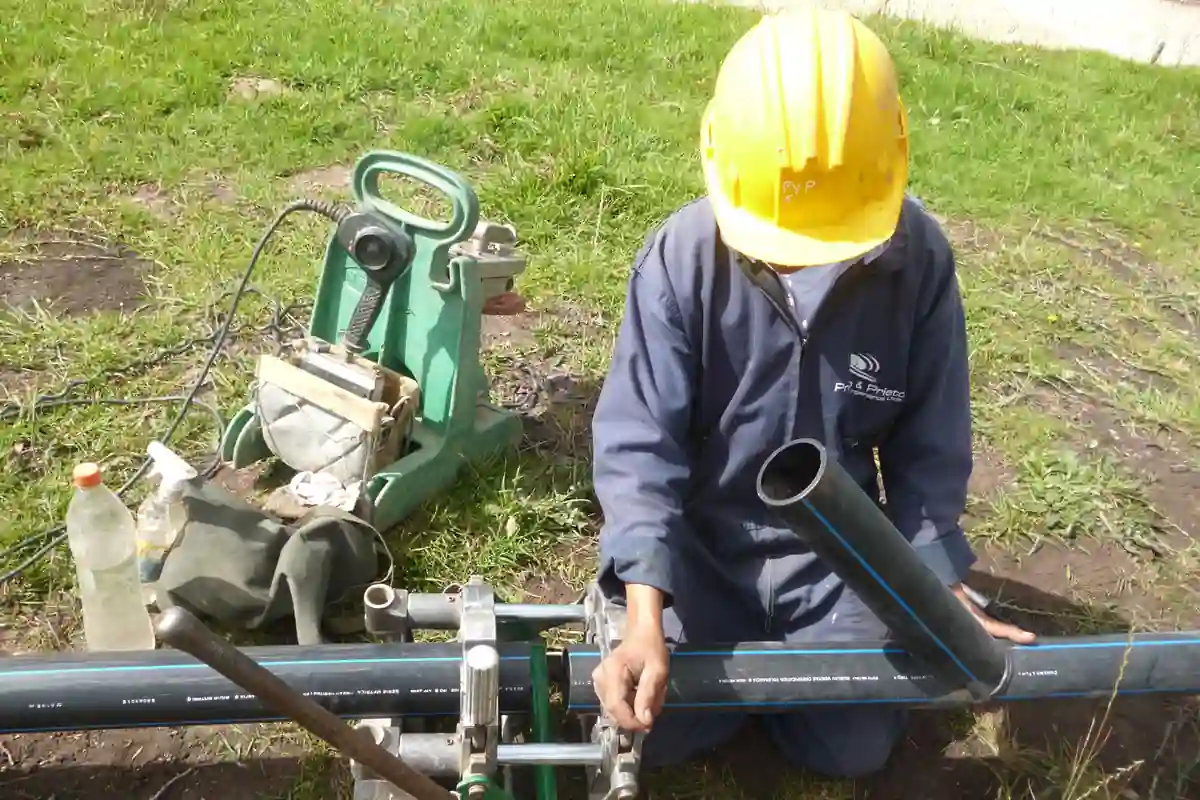
A plastics welder joins thermoplastics such as PE and PP in tanks, containers and technical components. Identifying the base material and compatible filler comes before selecting the welding method. Hot-air hand welding with rod differs from extrusion welding, which supplies heated plastic to build a larger bead. Joint preparation, clean surfaces, restraint and specified process settings work together to determine the result. The welder examines the bead and completes the agreed quality checks. A smooth surface does not prove internal integrity; a trial weld or additional test may form part of the work instruction.
What will you do?
- Check drawings, material types and the required joints.
- Prepare components to size and position joints carefully.
- Use welding equipment and supports according to the work instruction.
- Inspect completed work and assist with specified product checks.
- Record material details, findings and completed operations.
Where will you work?
You may work in a plastics fabrication workshop, for an installation company or at a project site. Products range from small parts to large tanks and pipe assemblies. Ventilation, work positioning and material handling require preparation.
What does a working day look like?
You review the drawing and materials before preparing components. Joints are then completed in the agreed sequence. During and after the work, you check dimensions, appearance and any points requiring assessment by a colleague.
Which skills and experience help?
Technical understanding, drawing reading and patience help. Experience with one process does not automatically cover every plastics welding method. Be specific about the materials, equipment and joining techniques you have used.
How can you develop?
You can learn additional welding processes, develop pipe-installation skills or work on more complex fabrications. Practical training and product knowledge can support greater independent responsibility.
Your practical experience
Describe a PE container or PP tank, including the joint geometry and equipment used. Distinguish hand-tool work from extrusion welding. Explain material identification, preparation and assessment of a trial weld, and mention drawing interpretation where relevant. Material thickness is useful context, without presenting one set of settings as universally suitable.
Practical questions about the trade
Why must a plastics welder identify the PE or PP and filler first?
Not every plastic can be welded to every other plastic using the specified process. Base material and welding rod or extrudate must match the approved combination. Similar colour provides no evidence of compatibility. Material identification and documentation therefore govern the choice; without them, an appropriate process instruction and a reliable judgement of the joint's suitability are missing.
How does hot-air hand welding differ from extrusion welding?
Hand welding uses hot air to work the joint and filler material. An extruder delivers heated plastic that can build a larger weld bead. Both require controlled preparation and material compatibility, but the equipment, filler delivery and process controls differ. Selection depends on the product and joint geometry; a single temperature setting is not suitable for every plastic.
Is a tidy bead enough to accept a plastic weld?
Visual inspection can reveal irregularities and visible damage, but not every internal defect. Assessment also considers preparation, materials, process history and the specified checks. Depending on the job, a trial piece or additional test may be required. The welder records abnormalities and follows an agreed repair method, rather than treating appearance as proof of joint strength.
More about this occupation
Occupational, training and technical sources relevant to this page.
- myAcademy knowhow Kunststofbewerking
- SBB / KiesMBO — Productietechniek
- Leister WELDPLAST 300, 230V/3680W, CEE 3/16 | 175.392 | Lasextruders
- Leister FUSION 1 — Multilingual operating instructions
- Leister WELDPLAST S1, 230V/1600W, plugue UE | 148.396 | Extrusoras
- Leister WELDPLAST S2 PVC, 230V/3000W, EU plug | 135.724 | Extrusion Welders
- myAcademy Know-how Plastic Fabrication
- Welding parameters for extrusion welding