What does this occupation involve?
Galvanizing involves a series of coordinated production stages. Products must be identified and prepared for the specified process, then checked and handled carefully afterwards. Duties vary between facilities and workstations. Supporting hot-dip galvanizing does not mean independently controlling every treatment stage; each employee works within a defined responsibility.
Prepare the fabrication before the zinc bath
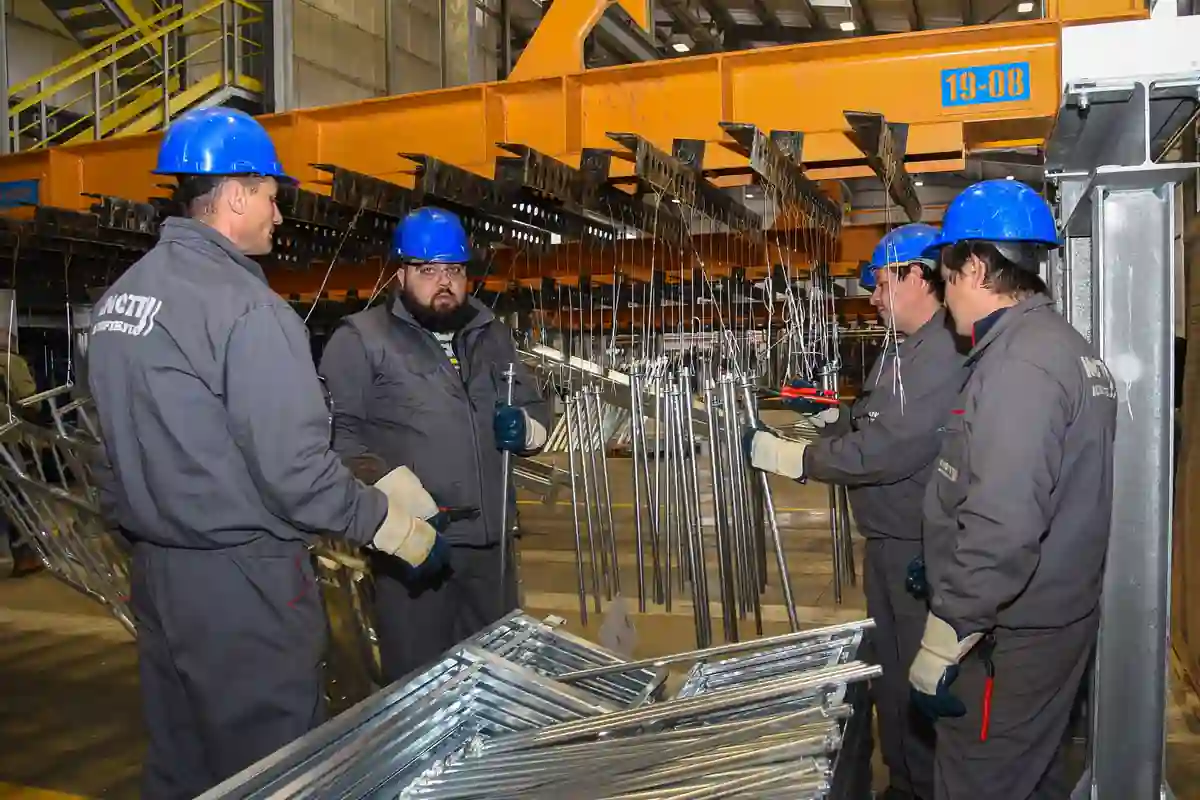
Batch hot-dip galvanizing involves preparing, hanging and pretreating steel fabrications before immersion in molten zinc. Hollow sections need arrangements that let air and liquids escape and zinc flow through. The worker checks part identity and visible preparation issues before the fabrication moves onward. Finishing and inspection cover coating coverage, thickness and unwanted zinc projections. A dull patch and an uncoated area are different findings. Decisions about fabrication suitability or revised lifting and immersion arrangements belong to the designated people responsible for the process.
What will you do?
- Check incoming products and their production identification.
- Prepare or position components according to the workstation instructions.
- Assist with agreed material movement and production operations.
- Inspect treated products and report visible irregularities.
- Finish, identify and prepare components for storage or dispatch.
Where will you work?
You work in an industrial facility with separate treatment and handling areas. Steel components can be large and heavy. Heat, lifting operations and process materials require workplace-specific instruction and close coordination with colleagues.
What does a working day look like?
The team reviews incoming batches and the production sequence. You prepare or handle products at your assigned station, then check and record completed work. Unusual component shapes or defects are discussed with the responsible colleague.
Which skills and experience help?
Practical production experience, careful handling and reliable communication are useful. You need to follow the site's process and lifting instructions. State which production stages and handling equipment you know, rather than treating all galvanizing work as one task.
How can you develop?
You can gain experience at additional workstations or develop in inspection and production handling. With relevant training, you may take on more independent process duties or support the organisation of a team.
Your practical experience
Use a fabrication such as a handrail, staircase or hollow-section frame to explain your experience. Specify whether you prepared, hung, finished or inspected the steel. Describe how you identified a missing opening, residual contamination or uncoated area, and how the part was marked and referred for a technical decision.
Practical questions about the trade
Why do hollow steel fabrications need openings for galvanizing?
Air and pretreatment liquids need an escape route while molten zinc enters and drains. A closed cavity can create dangerous pressure and prevent proper coating. Openings are assessed for the geometry and hanging orientation of the fabrication. Workers flag missing or doubtful provisions rather than improvising a hole arrangement at the bath.
Why is steel cleaned and pickled before hot-dip galvanizing?
The coating needs to form on suitably prepared steel. Grease, rust and fabrication residues can interrupt that contact. Pretreatment therefore includes several cleaning stages followed by fluxing, but the line does not automatically remove every contaminant. Checking incoming work helps identify additional preparation needs before uncovered areas appear after the galvanizing process.
Does a dull galvanised coating always indicate a defect?
No. Steel chemistry affects the reaction with zinc and can change coating appearance and thickness. Inspection therefore considers coverage, thickness and the condition of the finished item as well as colour. A dull region, a sharp zinc projection and an uncoated patch require different assessments against the specified product criteria.
More about this occupation
Occupational, training and technical sources relevant to this page.